The macro split trap in triathlon nutrition
If you’ve ever found yourself hunting for the “ideal” macro split for triathlon — perhaps a tidy 50% carbs, 25% protein, 25% fat — you’re not alone.
Macro targets are everywhere: fitness apps, social media graphics, generic nutrition calculators. They look reassuringly precise, and they offer the promise of control.
But for many triathletes, those percentage-based macros are undermining recovery and making day-to-day nutrition harder than it needs to be.
This isn’t because tracking is inherently bad, or because apps are useless.
It’s because the most common way macros are prescribed doesn’t reflect how a triathlete’s body actually works — especially across different training phases.
Why percentages feel helpful
A percentage split is appealing because it scales automatically. Train more, calories go up, macros go up.
Train less, everything drops. It feels logical, and the maths is done for you.
The problem is that not all macronutrients should scale in the same way.
Carbohydrate often needs to rise and fall with training demands.
Fat can fluctuate within a sensible range.
Protein, however, is different. Your protein requirement is driven primarily by your body size, lean mass, age, and the type of training you’re doing — not simply how many calories you happened to burn that day.
When protein is treated as a fixed percentage, it can end up being too high when training volume is large, and too low when training volume drops or you’re trying to lose weight.
The practical problem: protein shouldn’t track calories
Here’s what typically happens with a standard percentage split:
High-volume training weeks
If you’re eating a lot to support a big block — long rides, bricks, higher overall load — a fixed percentage can push protein intake into extreme territory.
That often creates two issues:
You feel overly full and struggle to eat enough carbohydrate to fuel quality training
You spend money and effort forcing down protein that isn’t offering extra benefit
More protein isn’t always better. Beyond a certain point, it’s simply displacing the fuel that supports endurance performance: carbohydrates.
Lower-volume weeks or body composition phases
When training volume drops (off-season, recovery weeks, injury spells) or if you’re aiming for gradual body composition change, total calories often decrease.
In more severe cases, this can contribute to Relative Energy Deficiency in Sport (RED-S), which has consequences for hormones, bone health, recovery, and performance.
Even pro athletes suffer from RED-S. In this video I go through Lionel Sanders’ recent diabetic concern and discuss how it can affect triathletes at any stage.
If protein drops along with calories, you can end up under-consuming protein at the exact time it matters most for maintaining muscle and supporting adaptation.
Inadequate protein makes it harder to preserve muscle during periods of lower training load or reduced energy intake, and it can slow adaptation when training stress increases again. This is why protein is best treated as a stable anchor across the season, rather than something that fluctuates sharply with calories.
What this looks like in real life
Triathletes tend to fall into one of two patterns when they rely on app-generated percentages:
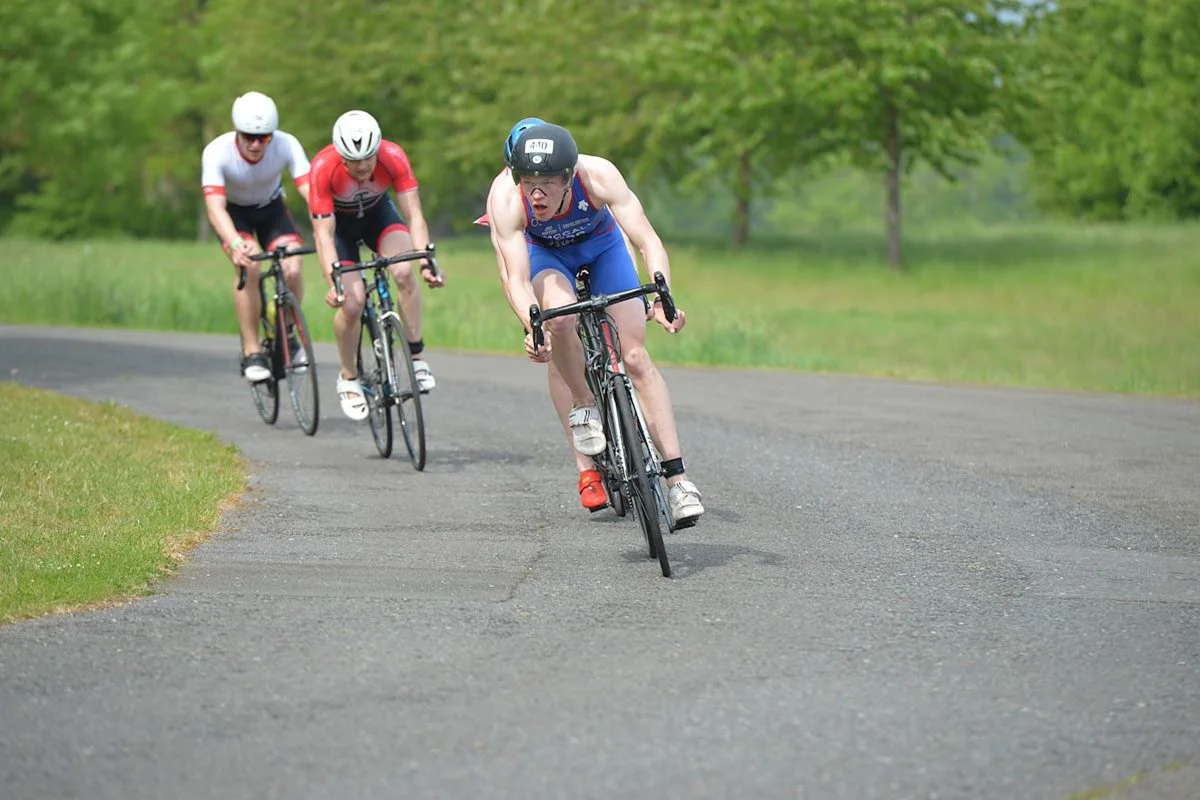
The high-volume athlete who ends up eating very high protein, feels heavy and sluggish, and still doesn’t feel well-fuelled for key sessions.
The athlete trying to “lean up” who sees their weight dropping, but also notices pace, power, mood, and recovery declining along the way.
Both are avoidable with a more structured approach.
A better framework for triathlon macros
A more effective system is to set your macros in a way that reflects what each one actually does.
Your protein intake should be tied to your body weight, not your caloric intake.
Fat consumption should be kept within sensible ranges, allowing for health and hormone production.
And most importantly for training, your carbohydrate intake should be reflective of your training demands, as one increases so does the other, and vice versa.
This aligns much better with how triathletes train: some days are long and demanding, some are lighter, and your nutrition should adapt accordingly.
Step 1: Set protein using body weight
A practical target range for most triathletes is:
Protein: 1.4–2.2 g per kg of body weight per day
Where you land within that range depends on context:
Higher end: during a weight-loss phase, in heavy training blocks (bricks, long rides, double training days), for older athletes (50+), or if recovery is poor
Mid range: for most base and build training with consistent fuelling
Lower end: can work for lighter weeks if overall intake is solid and training stress is low
Step 2: Set fat as a range, not a fixed number
Fat supports hormone function, helps with vitamin absorption, and contributes to overall health and satiety. Too low for too long is rarely a good idea for triathletes.
Aim for roughly 15 - 35% of your total daily calories to come from healthy fat sources. This includes foods like fatty fish like salmon, full fat milk, eggs, avocados and olive oil.
This is a wide range by design. It allows flexibility while keeping you away from extremes.
Step 3: Use carbohydrates to fuel training
Protein and fat set the baseline. Carbohydrates drive performance.
In training blocks, most triathletes should actively plan carbohydrate intake. During training, aim to take in 30–90g of carbs per hour depending on session length to maintain energy and avoid fatigue, with daily intake rising and falling alongside training load.
Big days create a greater need for carbohydrates. Lighter days allow intake to come down slightly — without sacrificing recovery or overall energy availability.
This Fuelling Guide gives you simple, evidence‑based strategies for fuelling every session — from pre‑workout carbs to in‑session fuelling and recovery — so you can train stronger and race faster.

Why this works better for performance and recovery
This structure solves several common issues at once:
Protein stays consistently adequate for muscle repair and adaptation across the season
Fat intake remains sufficient to support hormones and general health
Carbohydrates become the main lever you adjust to match training load and intensity
It also supports long-term consistency. Triathlon performance is rarely transformed by a single purchase or a single workout.
The biggest gains often come from the unglamorous basics: fuelling properly, recovering well, and staying healthy enough to train consistently for months.
Practical tips to implement this without overcomplicating life
You don’t need to become obsessive with tracking to benefit from this approach. There are simple ways to apply it.
Start by estimating protein based on body weight and build meals around hitting that comfortably.
Keep fat consistent with whole-food sources (oily fish, olive oil, nuts, dairy, eggs, avocado).
Add carbohydrate around training like it’s part of the session, not an optional extra (breakfast carbs pre-session, carbs during longer sessions, carbs in the meal after)
If you do use an app, be aware that many default macro settings aren’t designed for endurance training. You may need to override the percentages or work from gram targets instead.
The bigger takeaway
There isn’t one perfect macro ratio for triathlon. Your needs shift across training blocks, race builds, recovery periods, and the off-season.
A rigid percentage split can look tidy, but it often fails in the real world — especially for protein.
A more robust approach is simple: anchor protein, protect fat, and let carbohydrates do the heavy lifting in response to training demands.
It requires slightly more thought upfront, but it tends to deliver what most triathletes are actually chasing: better recovery, higher-quality sessions, and more consistent performance over the long term.
For a practical next step, this article outlines the key nutrition habits triathletes can build to support training, recovery, and long-term consistency.