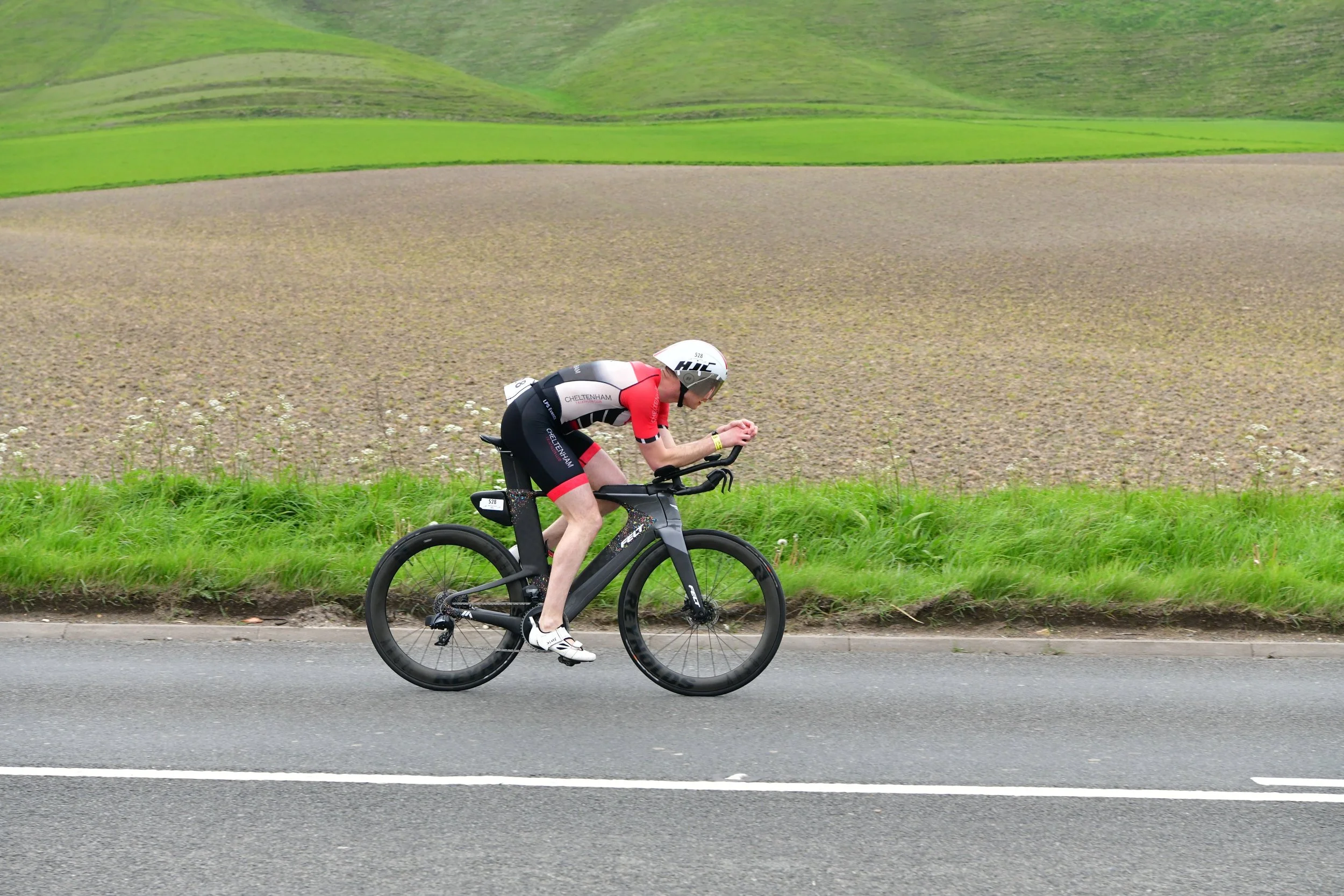
Ironman nutrition: why it matters more than you think
Preparing for an Ironman requires an enormous investment of time, energy, and commitment.
Months of structured training, early mornings, long weekends, and careful planning all build toward one race day.
Yet despite this preparation, many triathletes reach the start line without the same confidence in their nutrition strategy as they have in their training.
Race-day nutrition is not about chasing marginal gains or following rigid rules. It is about giving yourself the best possible chance to express the fitness you have already built.
When fueling is poorly planned — or improvised under pressure — performance can unravel quickly.
When it is thought through and practiced, it becomes an advantage that supports you from the opening swim strokes to the final miles of the marathon.
Ironman nutrition has a reputation for being complicated. Carb loading, breakfast timing, in-race fueling, hydration, sodium, caffeine — each can feel like a potential point of failure.
In reality, the fundamentals are straightforward when you understand the underlying principles and apply them in a way that fits you as an athlete.
This article outlines a clear, practical framework for Ironman nutrition that works for all triathletes, whether it’s your first or your 10th and you’re pushing for a PB.
The one principle that underpins all Ironman fueling
To understand Ironman nutrition, it helps to start with how your body produces energy during long-duration racing.
You rely primarily on two fuel sources:
Fat, which is stored in large quantities and is effectively unlimited during an Ironman
Carbohydrate, which is stored as glycogen in the muscles and liver and is much more limited
Even lean athletes carry tens of thousands of calories of fat.
Carbohydrate stores, by contrast, are typically enough to fuel only a few hours of moderate-to-hard exercise.
Even at Ironman intensity, carbohydrate use remains significant throughout the race.
When carbohydrate availability drops too low, performance suffers dramatically. Pace falls, effort feels disproportionately hard, and decision-making declines.
This is what many athletes describe as “bonking” or “hitting the wall” — a situation that is difficult to recover from late in the race.
The central goal of Ironman nutrition is therefore simple:
Protect carbohydrate availability for as long as possible.
Everything else — carb loading, race breakfast, bike and run fueling — exists to support that objective.
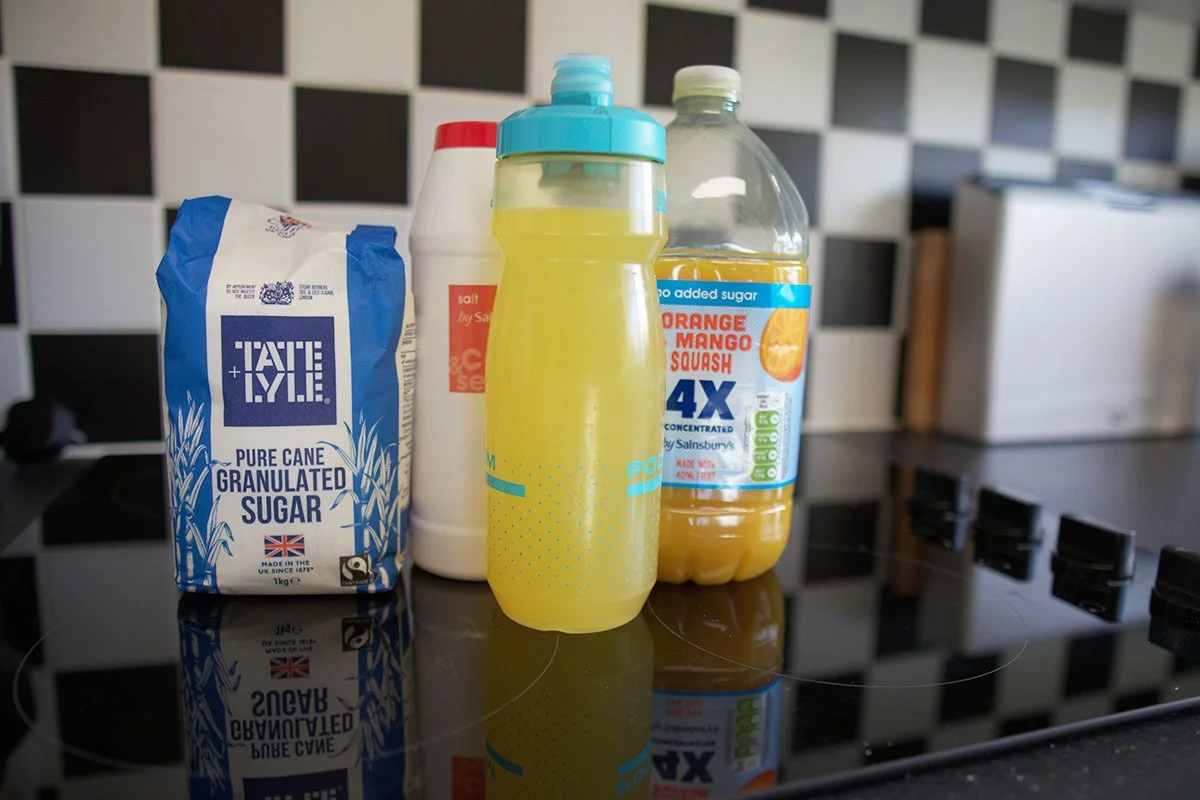
Carb loading: starting the race with a full tank
Carbohydrate loading allows you to begin race day with maximised glycogen stores, rather than relying solely on what you can consume during the event.
This is not about extreme or last-minute eating.
Effective carb loading is planned, deliberate, and practiced in advance.
Timing and intake
Most athletes benefit from beginning their carb load 36–48 hours before the race.
There is no need to reduce carbohydrates beforehand; doing so only increases stress and reduces consistency.
A practical target is approximately 8–12 grams of carbohydrate per kilogram of bodyweight per day during this period.
The exact amount will vary between athletes, but consistency matters more than precision.
Food choices that support digestion
During carb loading, appetite often becomes the limiting factor rather than energy needs.
To make the process manageable:
Keep fat intake relatively low, as it slows digestion and increases fullness
Prioritise low-fibre carbohydrate sources to reduce bloating and gastrointestinal risk
Allow protein to come naturally from foods rather than deliberately increasing it
Fibre is normally a cornerstone of a healthy diet, but reducing it briefly before race day is a strategic choice to support comfort and absorption — for example, removing the skin from fruit or choosing white bread over wholemeal.
This process is far easier when it’s planned rather than improvised.
A structured carb-loading approach like this one helps you hit carbohydrate targets without guesswork, digestive stress, or last-minute panic.
Just as importantly, carb loading should be tested well before your goal race.
Individual tolerance varies, and refining your approach across training blocks removes uncertainty on race week.
Race morning breakfast: supporting, not replacing, preparation
A common mistake among triathletes is treating breakfast as the main fuel source for the race.
In reality, most of the energy you use on race day comes from the glycogen you stored during carb loading and the carbohydrates you consume during the race itself.
The purpose of breakfast is narrower but still important. It helps top up liver glycogen after the overnight fast and provides a sense of stability and routine before the start.
An effective race morning breakfast should be high in carbohydrates, low in fat and fibre, and well practiced.
Protein does not need to be excluded, but it should not be the focus. The focus should be carbohydrates as this is what will fuel you.
Protein and fibre is likely to make your breakfast feel heavier which can cause gastrointestinal issues later on in the bike.
This can make it harder to hit your fuelling targets when they matter most, in the second half of the race.
The pre-swim top-up: bridging the gap
Breakfast should ideally be eaten 2-4 hours before your race start.
To top up your stores just before the swim, a small carbohydrate intake of 30-60 grams, 60 minutes before the start, can be useful.
This helps maintain blood glucose and ensures you start the bike feeling energised rather than flat.
Liquids or gels are typically the most practical options due to their ease of digestion.
This window is also where caffeine can begin to play a role, depending on your strategy.

Caffeine: a tool, not a requirement
Caffeine is one of the most consistently supported performance aids in endurance sport.
It can reduce perceived effort, improve alertness, and be particularly helpful in the later stages of an Ironman when fatigue accumulates.
An effective range is typically 3–6 mg per kilogram of bodyweight, taken either as a single dose or spread out across the race.
Many athletes find it most useful from the second half of the bike onwards, extending into the run.
As with all aspects of race nutrition, caffeine should be tested in training.
Sensitivity varies, and more is not always better. A clear strategy should be used in order to increase the benefits of caffeine and ensure it is being beneficial and not a hinderance.
Bike fueling: the foundation of your entire race
The bike leg is where Ironman nutrition is won or lost.
You are relatively fresh, intensity is controlled, and your ability to eat and drink is at its highest.
Starting fueling early on the bike is critical — waiting until hunger appears is already too late.
Carbohydrate targets
A minimum of 60 grams of carbohydrate per hour is a sensible baseline for most athletes on the bike. Many can tolerate more, reaching 90+ grams per hour, particularly when using products that combine multiple carbohydrate types.
Glucose and fructose use different intestinal transporters, allowing higher total absorption when combined.
You may see these listed as glucose/fructose or maltodextrin/fructose on product labels.
Product selection
For Ironman racing, sport-specific products — gels, drink mixes, chews, and bars — are generally more reliable than whole foods.
They are easier to carry, easier to quantify, and typically lower in fat and fibre.
If you choose to include more solid foods, earlier in the bike is the safest time, when digestion is least compromised. You are more likely to suffer from gastrointestinal upset when on the run.
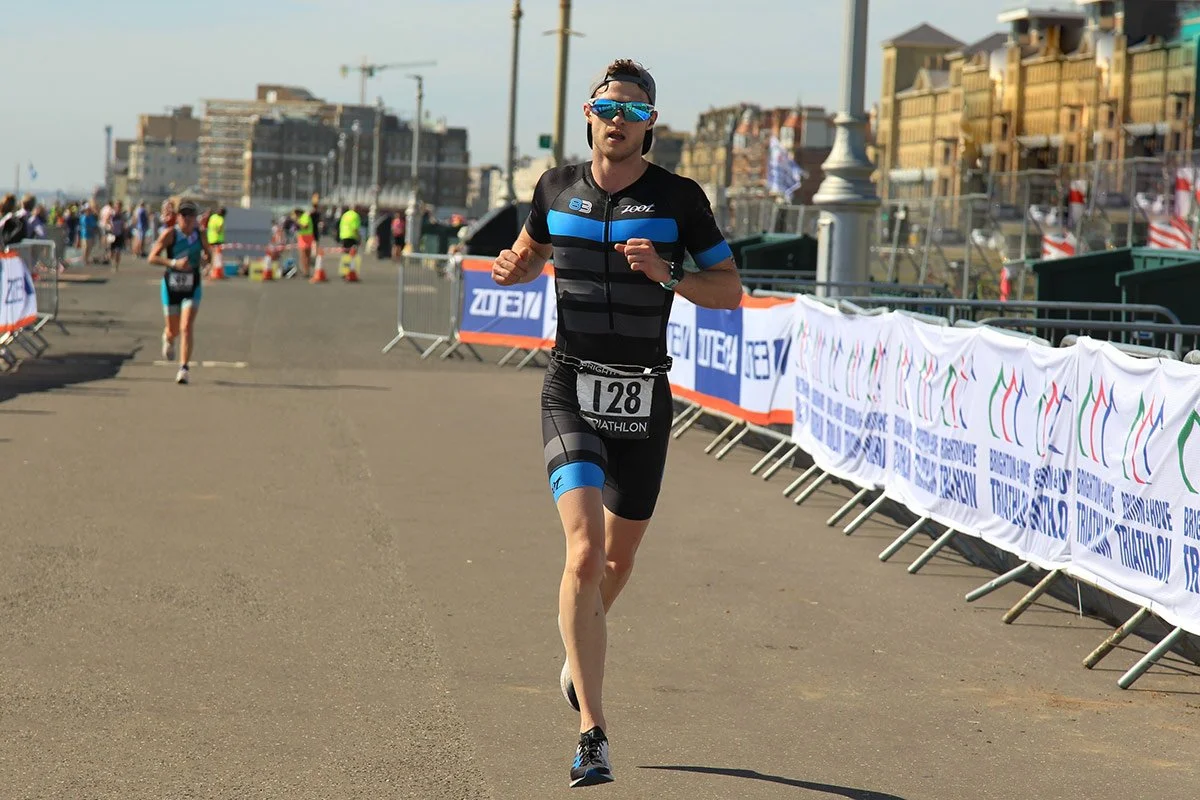
Run fueling: adjusting expectations without giving up
Running places greater stress on the gut, especially after hours of swimming and cycling.
For this reason, carbohydrate targets on the run are usually lower than on the bike.
Aiming for at least 50 grams of carbohydrate per hour is a strong starting point. Some athletes can tolerate more, but restraint early in the marathon often leads to better consistency overall.
The goal is not perfection — it is maintaining forward momentum and protecting energy availability as fatigue inevitably increases.
Why hydration and sodium determine fueling success
Carbohydrate intake only works if it is absorbed effectively, which makes hydration and sodium intake inseparable from fueling.
Drinking solely to thirst during an Ironman can be risky. While it is a helpful cue, but under prolonged load, heat, and stress it often lags behind actual fluid needs — meaning that by the time thirst is obvious, dehydration may already be affecting performance.
A starting point of around 500 ml of fluid per hour on the bike works well for many athletes, with adjustments made based on climate conditions, body size, and sweat rate.
Sodium matters
Fluids should generally contain sodium unless salt is being added separately.
Drinking large volumes of plain water over many hours can dilute blood sodium levels and impair hydration.
A practical range is 500–1500 mg of sodium per litre of fluid, depending on individual needs and environmental conditions.
This should be tested across training sessions, not guessed on race day.
Some athletes prefer to combine carbohydrates and fluids in one source; others separate them.
Both approaches can work. The key is familiarity, logistics, and comfort.
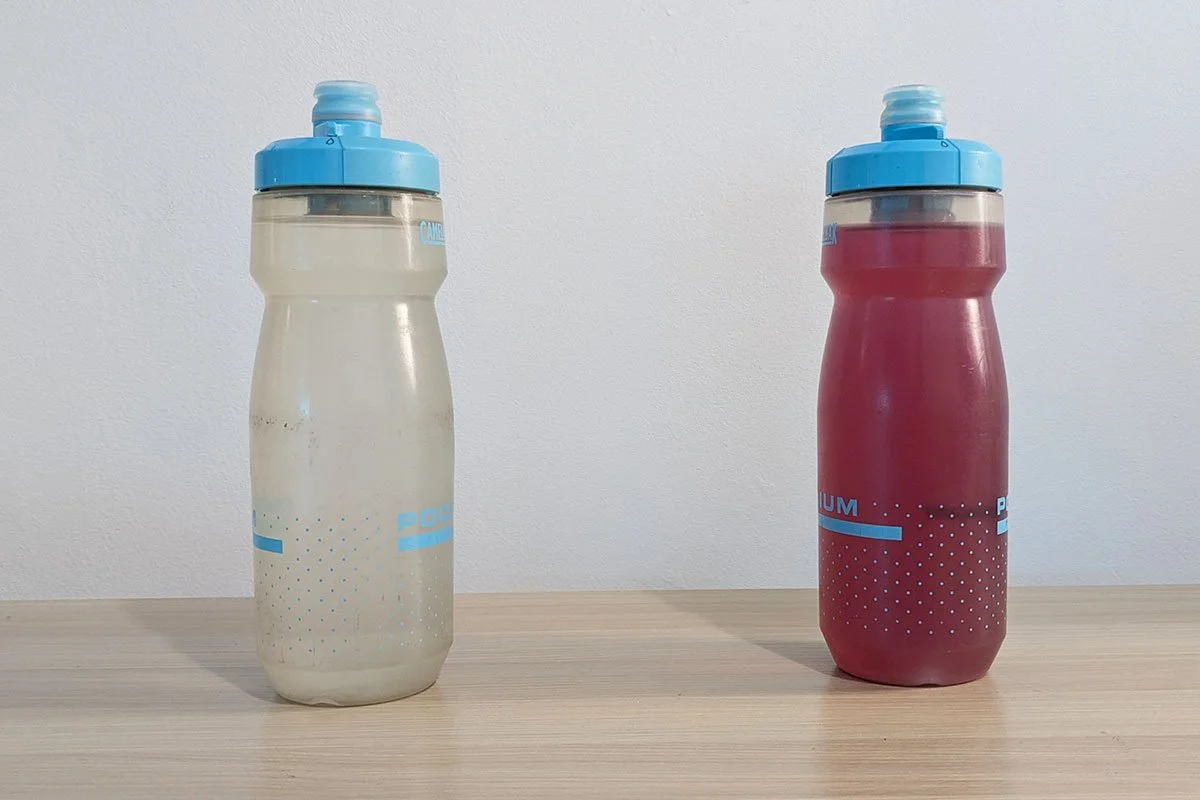
Planning for the unexpected: aid stations and special needs
Even the best-laid nutrition plans can be disrupted. Bottles are dropped, products are lost, and conditions change.
This is where aid station knowledge and special needs bags become invaluable.
Before race day:
Review exactly what nutrition and fluids are provided on course
Learn the carbohydrate and sodium content of those products
Practice using them in training as a backup
Special needs bags on the bike and run offer an opportunity to restock or reset if something goes wrong.
Whether you plan to use them actively or keep them as insurance, they should be prepared intentionally.
Do not include anything you would be upset to lose, as these bags are not returned after the race.
The bigger picture: confidence comes from preparation
Ironman nutrition does not need to be perfect.
It needs to be practiced, realistic, and suited to you.
When fueling is dialled in ahead of time, race day feels calmer.
The important decisions are already made.
Keeping you free to focus on pacing, execution, and staying present through the inevitable highs and lows of a long day.
Most importantly, good nutrition allows your training to show itself.
It does not create fitness, but it reveals it.
Approach your Ironman fueling with the same respect you give your training plan — patiently, progressively, and with a long-term perspective — and you put yourself in the strongest possible position to have a race you can be proud of.
If you want to see this in action with a real client, watch this video where I walk through the nutrition strategy I used to help a triathlete break the 10 hour mark in an Ironman.