How To Effectively Use Caffeine in An Ironman Triathlon to Break Personal Bests

Why caffeine deserves serious consideration in Ironman racing
In long-course triathlon, meaningful performance gains rarely come from dramatic changes.
Instead, they are usually the result of small, well-executed decisions layered on top of solid training.
Caffeine is one of the few legal, well-researched performance aids that can genuinely make a noticeable difference when used correctly.
Research consistently shows that caffeine can improve endurance performance by around 2–4%.
That may sound modest on paper, but in the context of an Ironman-distance race, it can translate into many minutes saved.
Over 15 hours, that's 18-36 minutes
Over 12 hours, that's 14-28 minutes
Over 8 hours, that's 9-19 minutes
Despite this, caffeine remains one of the most commonly misused elements of race nutrition.
How caffeine actually helps performance
Caffeine works through several mechanisms that are especially relevant in long-duration racing.
It can reduce the perception of effort, improve alertness, and help maintain focus when fatigue accumulates.
For Ironman triathletes, this often matters most late in the race, when energy levels dip and maintaining pace becomes psychologically challenging.
Importantly, caffeine does not replace good fuelling or pacing. It enhances what is already there.
Caffeine and carbohydrate strategies are often discussed separately, but from an evidence standpoint they sit on equally strong foundations.
Both are among the most consistently studied performance tools in endurance sport.
When carbohydrate intake, hydration, and training are appropriate, caffeine can help you access that fitness more effectively on race day.
To complement your caffeine strategy, this carb-loading guide shows how to structure race-week carbohydrate intake so you arrive at the start line with full energy stores — not guesswork or last-minute fixes.
Common caffeine mistakes triathletes make
In practice, caffeine-related issues tend to fall into predictable patterns.
These mistakes don’t just negate potential benefits — they can actively undermine performance.
Some of the most common problems include:
Taking too much caffeine too early in the race
Relying on caffeine to compensate for under-fuelling
Using caffeine products for the first time on race day
Failing to account for individual sensitivity
Excessive or poorly timed caffeine intake can increase gastrointestinal distress, raise heart rate unnecessarily, and amplify feelings of anxiety or discomfort.
In extreme cases, it can make pacing feel harder rather than easier.
Timing matters more than you might think
For Ironman racing, caffeine is rarely most effective when consumed at the very start.
Early in the race, adrenaline and freshness already provide a natural boost.
The greatest return usually comes later, when mental fatigue and muscular discomfort begin to limit performance.
Many athletes benefit from introducing caffeine gradually, with a clearer focus on the second half of the bike leg and into the run.
Studies suggest that 99% of caffeine is absorbed within 45 minutes of ingestion. This should be accounted for when you build it into your strategy.
This approach supports alertness and resilience when it is needed most, rather than wasting the effect when it offers little advantage.
How much is enough?
Caffeine requirements vary between individuals, but more is not always better. Moderate doses are sufficient for most triathletes and reduce the risk of negative side effects.
The science suggests between 3-6mg per kg of body weight. This however, depends on factors like personal tolerance, GI sensitivity and habitual consumption.
The goal is to feel slightly more alert and capable — not overstimulated.
Just as with carbohydrate intake, caffeine strategies should be tested during training and lower-priority races.
This allows you to learn how your body responds under realistic conditions, including heat, fatigue, and race-day nerves.
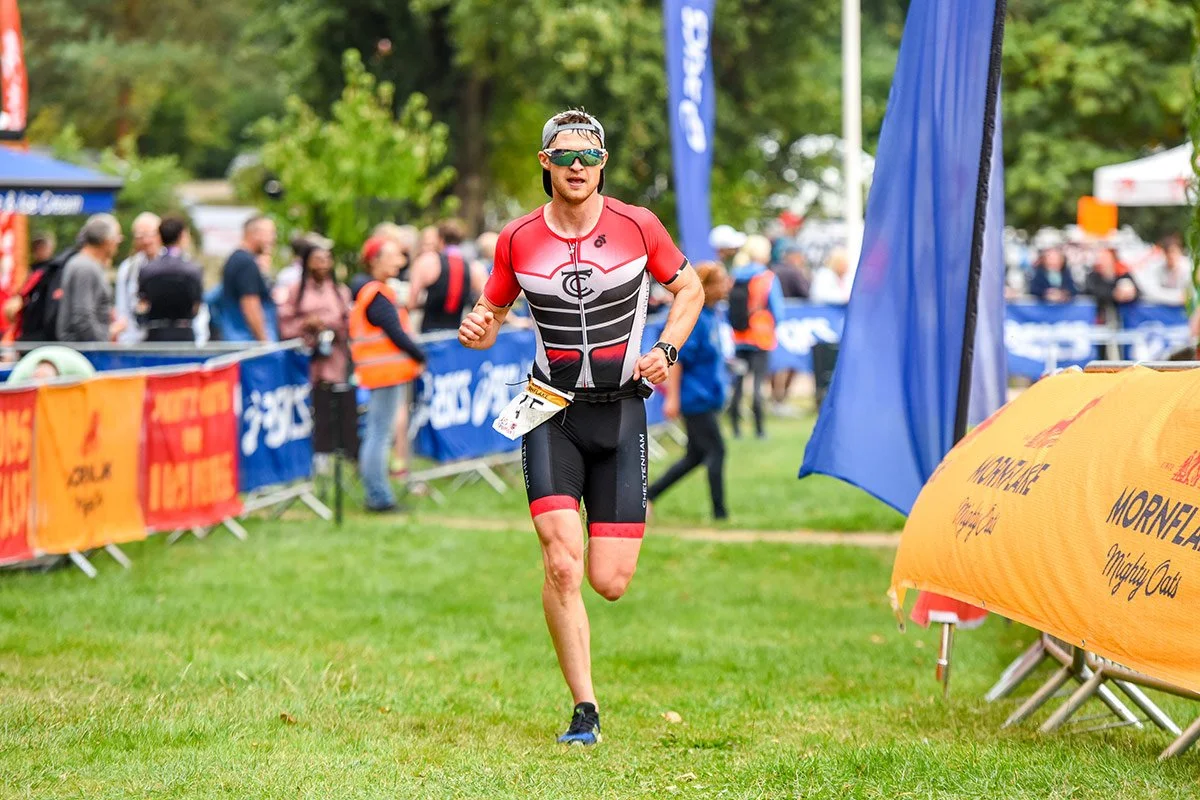
Caffeine is an additional strategy that must be practised
Caffeine is most effective when it sits on top of a well-executed nutrition plan rather than acting as a substitute for one.
Adequate carbohydrate intake, hydration, and sodium form the foundation of Ironman performance, and without these in place, caffeine is unlikely to provide meaningful benefit.
In some cases may even exacerbate fatigue or gut issues.
This is also where a long-term perspective matters.
Effective race-day caffeine use is something that’s rehearsed and refined over weeks and months in training, not improvised the night before an event.
Putting it into the bigger picture
Ironman nutrition is about stacking sensible, evidence-informed decisions that support both performance and health.
Caffeine can be a valuable tool, but only when it is used deliberately, conservatively, and in context.
For some athletes, caffeine will provide a noticeable lift late in the race.
For others, the benefits may be subtler — or not worth the trade-offs at all.
Both outcomes are valid. The aim is not to force caffeine into your plan, but to decide whether it meaningfully supports your racing.
When approached with patience and structure, caffeine can help you express the fitness you have already worked hard to build, without introducing unnecessary risk on one of the longest days in sport.
If your goal is to put all of this into practice and race in a way that reflects your preparation — not just your caffeine plan — this video breaks down how to approach Ironman racing with intention and confidence, so you can finish the day knowing you executed a race you’re genuinely proud of.