Are You Underfueling Your Triathlon Training? 10 Sneaky Signs You Need To Know

When hard training stops paying off
Many triathletes reach a point where something feels off. Training volume is high, food choices seem sensible, and yet performance stagnates, or even declines.
Sessions feel harder than they should, recovery drags on, and motivation starts to fade.
In many cases, this isn’t a problem with training but instead a problem with fuelling.
Underfuelling is widespread in triathlon, particularly among motivated age-group athletes balancing training with work and family life.
It rarely shows up as one dramatic symptom and, more often, it appears as a collection of subtle signals that are easy to dismiss in isolation but significant when viewed together.
Having worked with triathletes for the last 7 years, I’ve seen the damage that happens when they underfuel for months at a time.
But I’ve also seen amazing transformations, and in this article I’ll share the main signs that I see, and how to fix them.
Understanding underfuelling in triathlon
Underfuelling occurs when energy intake consistently fails to meet the combined demands of training, daily life, and basic physiological function.
This is often referred to as low energy availability.
Over time, the body adapts by prioritising essential processes and downregulating others, which can negatively affect performance, health, and long-term progression.
Importantly, this is not limited to athletes deliberately trying to lose weight. Many triathletes underfuel unintentionally, particularly during heavy training blocks — this often stems from not having a clear picture of how to fuel training demands.
Common signs you may not be eating enough
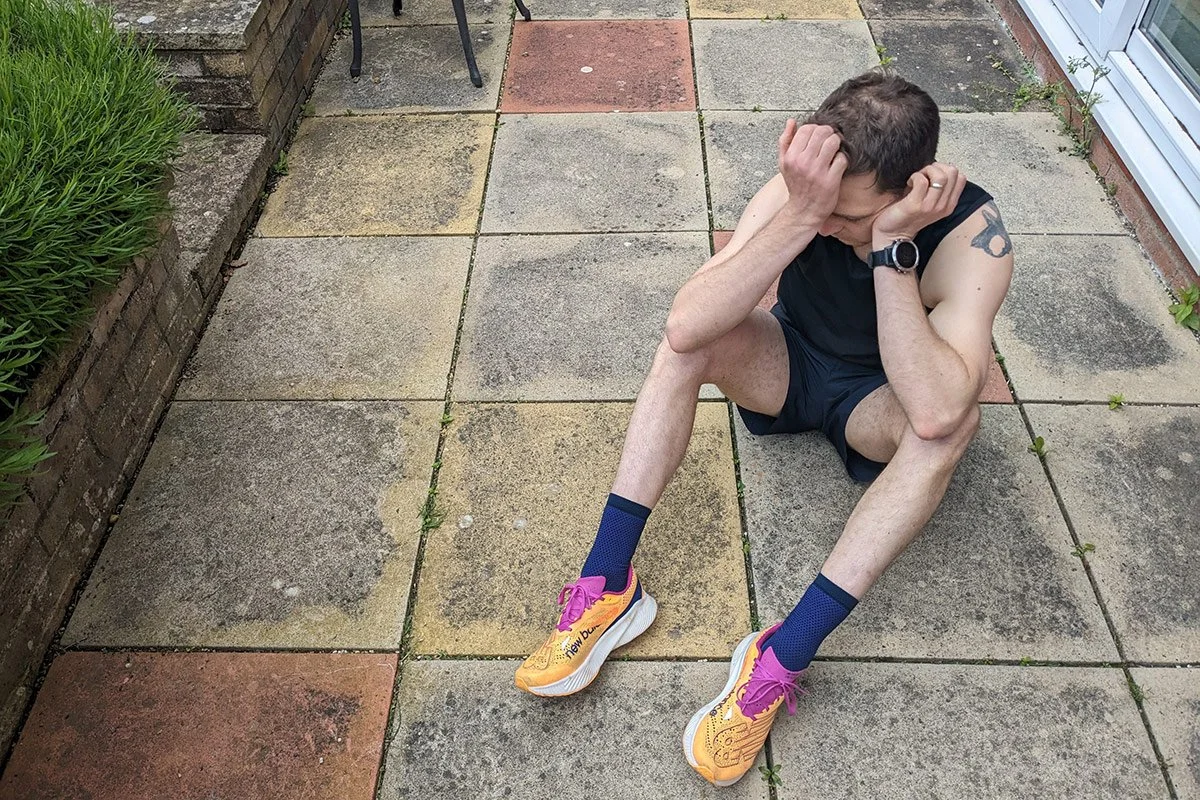
1. Persistent heavy or “Dead” legs
Feeling tired after a big week is normal. Feeling flat even after recovery days or lighter weeks is not.
When carbohydrate and protein intake are insufficient, muscle repair and glycogen restoration are compromised, leaving legs feeling heavy and unresponsive.
An increase in carbohydrate (minimum 60g per hour) during and around long or hard sessions, along with adequate daily protein intake, can noticeably improve recovery.
2. A big drop in motivation
When training starts to feel like a chore rather than a choice, it’s worth looking beyond psychology alone.
Chronic low energy intake can affect mood-regulating hormones and neurotransmitters, reducing drive and enjoyment.
A mismatch between how motivated you expect to feel and how you actually feel is a strong signal to review overall intake.
3. Changes in hormonal health
For women, missed or irregular menstrual cycles are a major red flag.
For men, reduced libido or the absence of regular morning erections can indicate suppressed testosterone.
These changes suggest the body is conserving energy by downregulating reproductive function — an important warning sign that should not be ignored.
4. Heart rate that feels “Off”
Heart rate is closely linked to how well the body is coping with stress.
Consistently elevated heart rates at low intensities, or unusually low readings alongside poor performance, may indicate inadequate energy availability.
Ensuring sufficient carbohydrate intake before and after training often stabilises these responses.
5. Unplanned weight loss
In triathlon, weight is often overemphasised.
Lighter does not automatically mean faster, and scale weight alone tells us very little about performance or health.
However, losing weight unintentionally almost always reflects a calorie deficit. If weight loss isn’t a goal, it shouldn’t be brushed aside, particularly if performance is suffering.
6. Repeatedly missing pace or power targets
Everyone has off days.
But when sessions consistently fall short despite good sleep and hydration, fuel availability should be one of the first areas to assess.
Carbohydrate is the primary fuel for moderate to high-intensity training. Without enough of it, maintaining pace or power becomes increasingly difficult.
7. Irritability and emotional volatility
Low energy availability affects the brain as much as the muscles.
Increased irritability, feeling overwhelmed by minor stressors, or a shorter temper can all be signs that intake is too low for current demands.
Noticing deviations from your normal emotional baseline can provide an early warning before physical symptoms escalate.
8. Poor sleep or early waking
Difficulty staying asleep, waking early despite fatigue, or restless nights can reflect an elevated stress response.
While many factors influence sleep, persistent disruption without an obvious cause warrants a closer look at fuelling, particularly carbohydrate intake.

9. Constant thoughts about food
Preoccupation with food, intense hunger, or episodes of uncontrolled eating often stem from earlier underfueling — especially around long or intense sessions.
Your body is a clever thing, and it notices that it doesn’t have enough energy and it ramps up the hunger signals.
Being more intentional with fuelling earlier in the day and around training frequently reduces evening cravings and improves appetite regulation.
10. Frequent illness or feeling run down
Consistency is one of the biggest drivers of triathlon performance.
Recurrent colds, lingering fatigue, or a general sense of being “run down” can signal suppressed immune function linked to chronic energy deficiency.
This is one of the most easily overlooked signs yet one of the most important to address.
What to do if this sounds familiar
If several of these signs resonate, the solution is often less complicated than expected.
In many cases, modest increases in daily energy intake — sometimes as little as 200–300 calories — can restore recovery, mood, and training quality within weeks.
Importantly, this does not mean uncontrolled eating or aggressive changes.
Weight gain is not inevitable, and improvements in body composition are often easier to achieve when the body is adequately fuelled and training quality improves.
It is always sensible to seek advice from a qualified professional to rule out other causes and ensure changes are appropriate, particularly if symptoms are persistent or severe.
Triathletes frequently struggle with knowing what to eat and when, and this can increase the chances of running into problems associated with underfuelling. In this article, I go through the ideal diet to follow for a triathlete with strategies that you can follow, so that you can perform at your best in your training and racing.