How Pro Triathletes Are Getting So Fast (And How You Can Learn From Them)
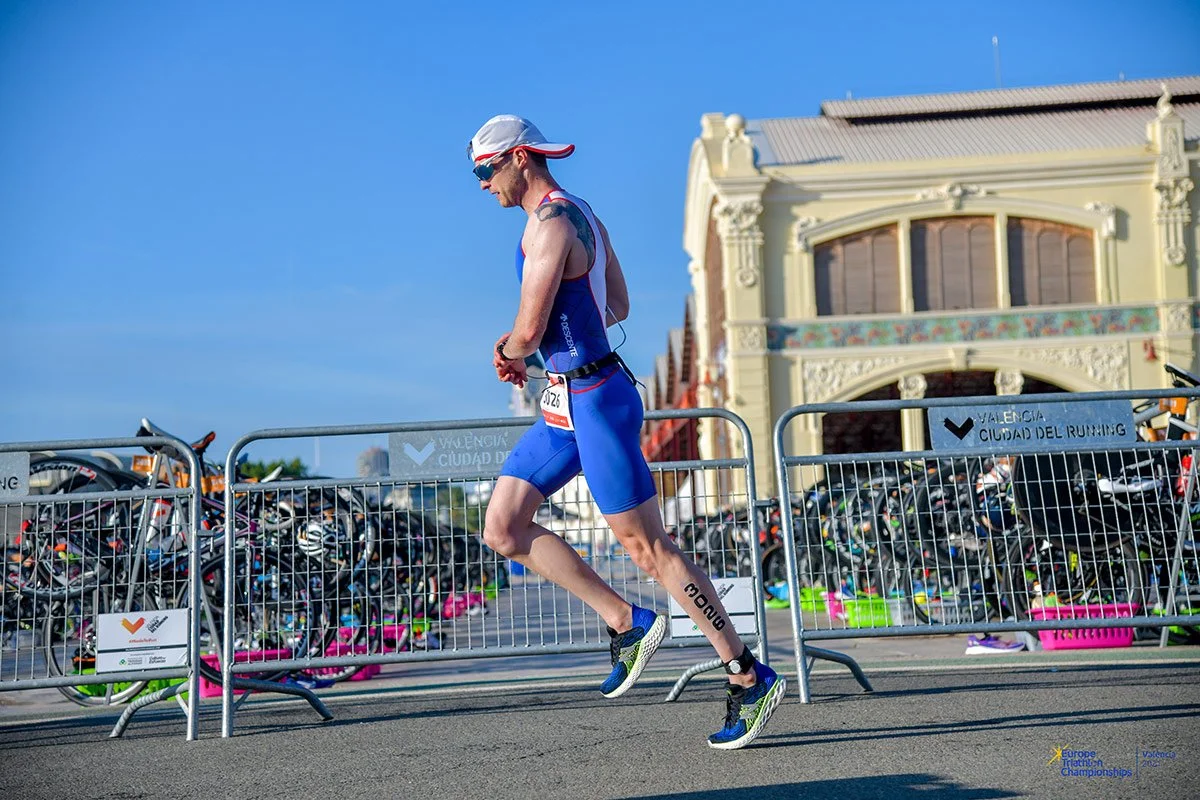
Pro triathlon is getting faster — here’s what’s actually driving it
Record times in triathlon aren’t falling because professionals simply “want it more” or train harder in the same old ways.
The biggest gains increasingly come from doing the fundamentals exceptionally well, then layering in smart detail: better fuelling, better monitoring, better conditioning, and better efficiency.
I work with both age-groupers and elites across long-course and short-course racing, and the same principle keeps showing up:
The pros aren’t chasing gimmicks.
They’re systematically reducing avoidable performance losses.
The good news is that a large chunk of this is relevant to committed amateur triathletes too — if you apply it sensibly, with your lifestyle and training reality in mind.
Below are four areas where pros are finding meaningful gains, and how you can translate the same ideas into your own training and racing without getting lost in extremes.
1. Fuel is part of the training plan now
A decade ago, nutrition often sat “next to” training:
Something you thought about when race day approached.
At the elite level, fuelling is now integrated into the training process itself.
High-carb fuelling is the clearest shift
Many professionals are routinely taking in 100+g of carbohydrate per hour in training and racing, sometimes more.
Usually, they’ve built the tolerance and logistics to do it consistently and know they can do so.
Now, compare that with many age-group athletes who are trying to get by on 40–60 g/h (or less), often without a clear plan.
Over an Ironman bike leg, that gap can become the difference between running well and surviving the marathon.
But the key lesson isn’t “copy the pros’ numbers.” It’s learning how to push your carb intake up strategically, refining your plan well in advance of your race.
I helped a triathlete take off over 90 minutes from his Ironman time, and you can watch the YouTube video where I go through the exact strategies that helped him do that.
Carb loading: still underused, still powerful
Carbohydrate loading can meaningfully increase stored glycogen and support performance in long events.
It isn’t a magic trick, and it doesn’t need to be chaotic, but it does require planning and rehearsal — especially if you have a sensitive gut.
A clear carb loading plan is the key to getting it right. My carb loading guide highlights the key steps you need to follow to do it properly, and this will directly help to improve your performance in racing.
Periodisation beats ideology
At the pointy end of sport, the best athletes aren’t “always low carb” or “always high carb.”
They adjust carbohydrate intake to the goal of the session. Higher carbs for long sessions, intense sessions, bricks, and race specific work.
Lower carbs (but not none!) for lower intensity work.
For age-groupers, the most reliable performance gains usually come from fuelling quality training well, rather than forcing low-fuel sessions that compromise consistency.

Supplements: An extra layer, not the foundation
Some legal supplements have evidence behind them and may be considered in elite programmes — particularly where marginal gains matter.
The ones that are most consistently discussed in endurance sport include caffeine, sodium bicarbonate, creatine, and beta-alanine. These are backed up by scientific research which has been peer reviewed and critically analysed.
Supplements should be seen as optional extras. Targeted tools for an extra push and not a baseline standard.
A practical stance for most triathletes would be to:
Prioritise daily fuelling, recovery, and race-day execution first
Treat supplements as optional, targeted tools, not the starting point
Be wary of “new” products with big claims but limited independent evidence
2. Data and monitoring: useful only if it changes decisions
Pros now have access to an extraordinary amount of information: heart rate trends, HRV, lactate, running power, and sometimes lab-based metabolic testing.
The value isn’t in collecting numbers but instead in using them to train more precisely.
The underlying goal: Efficiency
Elite coaching tends to focus on what an athlete can produce for the lowest physiological cost.
That might mean pinpointing thresholds more accurately, identifying drift in heart rate during steady work, and understanding how pacing changes carbohydrate demand over different distances.
For age-group athletes, you don’t need a garage full of testing equipment to benefit from this approach.
Consistent tracking of key sessions, long rides, and bricks can reveal patterns you can act on: recovery needs, pacing errors, fuelling gaps, or an intensity distribution that doesn’t match the training phase.
3. Environmental conditioning: heat, altitude, and recovery choices
Performance isn’t just about your engine; it’s also about how your body behaves in different environments.
Professionals increasingly treat heat and altitude as serious training tools for improving performance, and for good reason.
Heat adaptation is becoming mainstream
Repeated heat exposure can improve thermoregulation and support cardiovascular efficiency.
Done well, it can help in hot races and sometimes even improve performance in cooler conditions.
The practical warning:
Heat training should be progressed carefully. Many athletes overdo it — turning “adaptation” into “exhaustion.”
If you choose to explore heat training, make sure you control the intensity, build exposure gradually and, prioritise your hydration and sodium strategy.
And most importantly, remember that heat training is the adaptation, not the session itself.
Altitude camps: powerful, but not essential
Altitude exposure can increase red blood cell mass for some athletes, potentially improving oxygen delivery.
It can be valuable, but it’s expensive and not realistic for everyone.
There are altitude tents that you can buy to use at home, but at this point in time they do not have a strong evidence based to support their use.
Cold exposure: be strategic
Ice baths and cold water immersion are popular, but the evidence is mixed.
A pragmatic approach is to view cold primarily as a short-term recovery tool — potentially useful after racing or during periods of very high load — rather than a daily habit.
In some instances, frequent cold exposure may blunt training adaptations and it is not something I recommend regularly.
4. Aerodynamics and biomechanics: free speed is still speed
Even perfect physiology gets wasted if you’re pushing through unnecessary drag or running inefficiently.
Professionals invest heavily in aerodynamics, bike fit, and running economy because the time savings can be large — especially over long course.
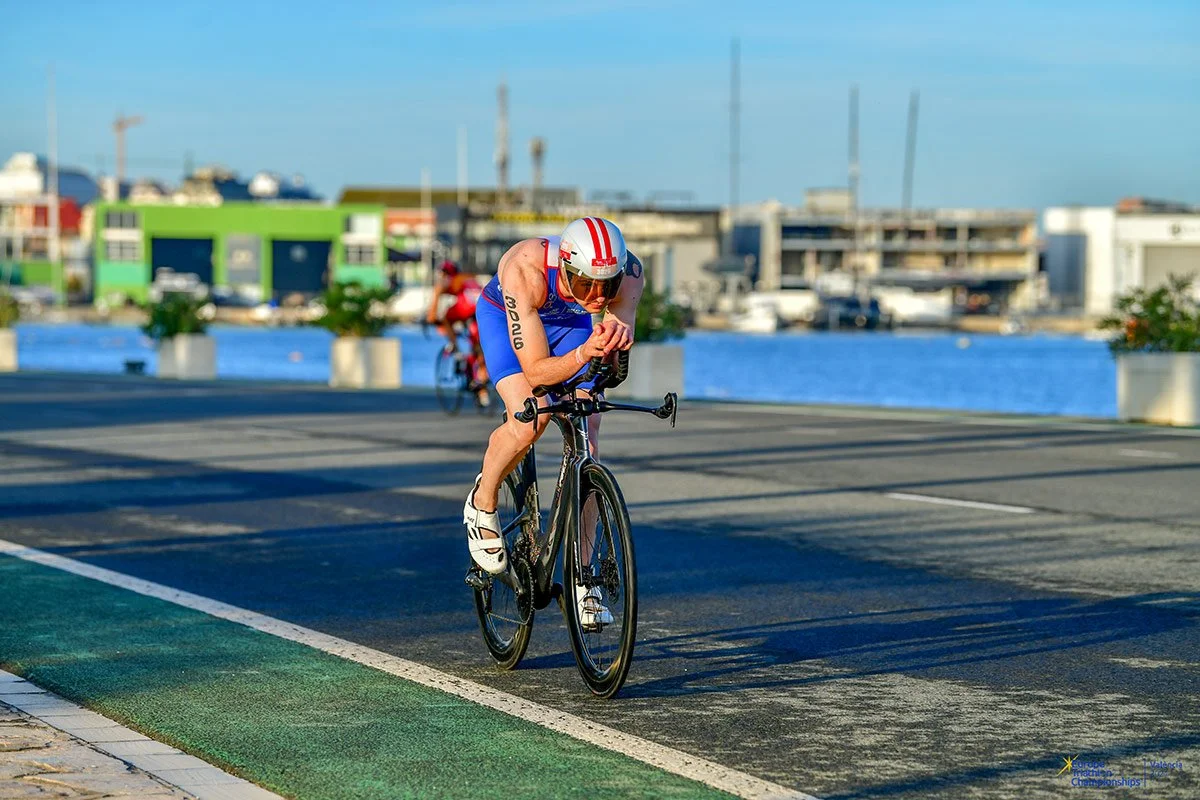
Bike fit is often the best “upgrade”
A good fit helps you to reduce frontal area without losing power, improve comfort, reduce muscle fatigue, and support better pacing and nutrition delivery (it's hard to fuel when you're fighting your position).
An overly aggressive position can backfire by increasing physiological cost, raising carbohydrate demand, and compromising the run.
The best setup is not the most extreme but instead it’s the most sustainable at race intensity.
Equipment matters less than how it’s used
Helmets, bottle placement, kit choice, and shoes can all make a difference, but the biggest improvements often come from optimising position and movement first.
Treat gear as a finishing layer, not the foundation.
What’s worth copying as an age-grouper?
The pro playbook can be inspiring, but the most valuable takeaways are also the least dramatic:
Fuel the work you’re trying to do, and practise race nutrition regularly
Use data to guide decisions, not to collect “interesting” metrics
Respect environment: heat, altitude, and recovery tools have trade-offs
Prioritise efficiency: fit, positioning, and mechanics can deliver big gains
And crucially: keep it sustainable.
Many age-group athletes have demanding lives outside the sport.
The best plan is the one you can execute for months — not the one that looks impressive for a week.
If you want to get faster, start where the pros start: consistent training supported by consistent fuelling, smart recovery, and a system that turns effort into adaptation.
The marginal gains matter, but only after the fundamentals are nailed.
Now that you know how the Pros go faster, check out the nutrition strategies that support peak performance in Ironman races in this article.