
When fitness isn’t the limiting factor
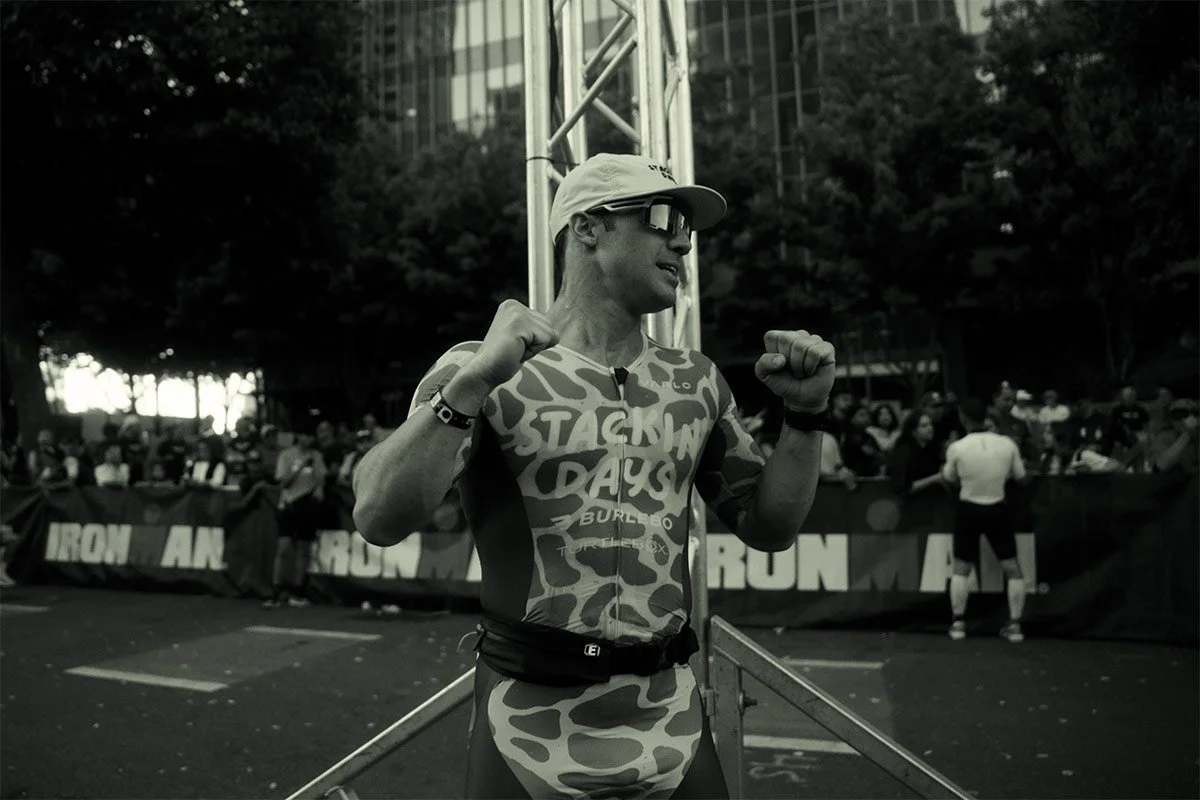
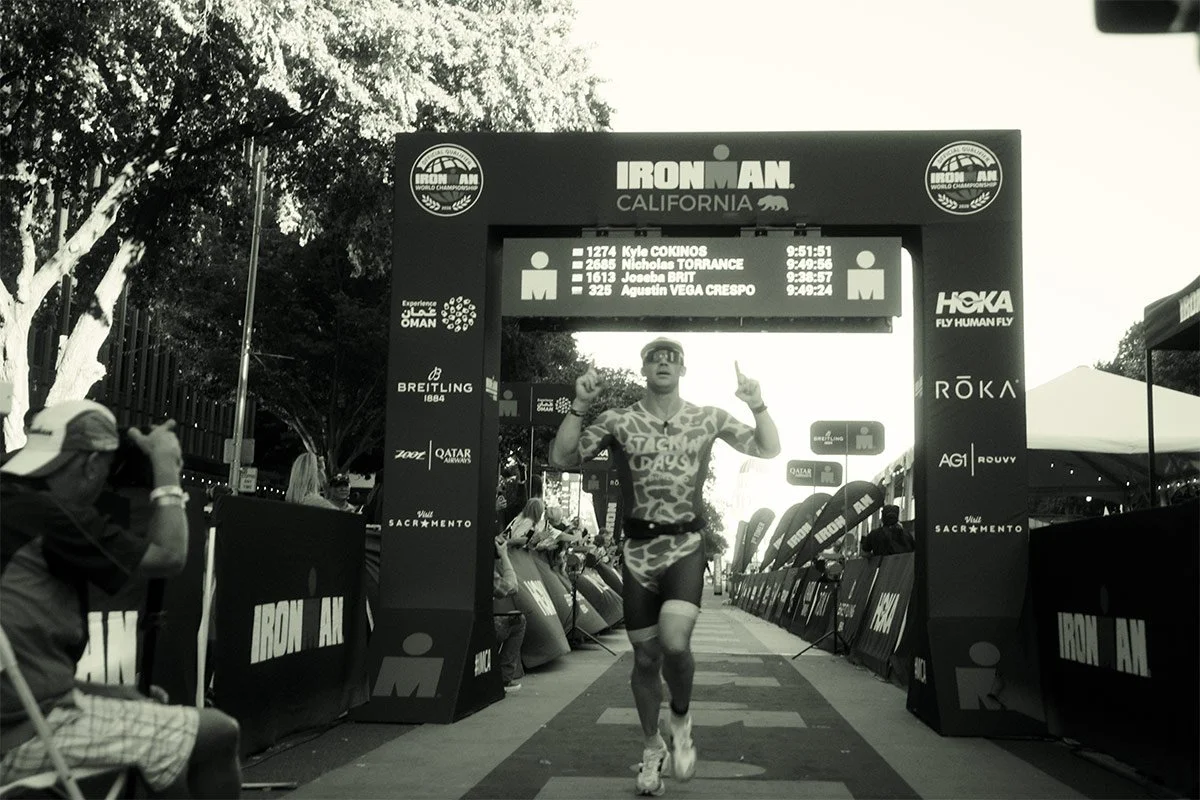
In October 2025, Kyle Cokinos crossed the line at Ironman California in 9:51 — over 90 minutes faster than his previous personal best.
This was a breakthrough he had chased for years.
What makes Kyle’s story relevant to many triathletes is not that he suddenly trained harder or found a secret workout. In fact, his preparation had been solid for a long time — He was fit, consistent, and committed. Yet every Ironman followed the same pattern: a strong swim and bike, followed by a progressive decline on the run.
The missing piece turned out not to be fitness, but nutrition.
By addressing three specific areas of race nutrition — and practising them properly — Kyle transformed how he finished long-course races.
These principles are not about chasing a particular time goal, and so these strategies will help you regardless of your goal pace.
1. Carbohydrate loading: structure beats good intentions
Carbohydrate loading is one of the most consistently supported performance strategies in endurance sport. Research shows improvements of around 2–3% when it is done well.
In an Ironman, that can translate to 30 minutes faster.
The problem is that many triathletes believe they are carb loading when, in reality, they are falling well short.
Kyle was familiar with the general guideline of consuming roughly 8–12 grams of carbohydrate per kilogram of body weight in the 24 hours before racing.
On paper, he knew what to do.
In practice, his approach lacked structure. Meals included some appropriate foods, but portions were too small, fibre and fat were creeping in at the wrong time, and there was no clear plan for timing or total intake.
This created uncertainty going into race day — and uncertainty tends to show up late in the race as crashing energy levels or stomach upset.
What changed was not the principle, but the execution. We built a personalised plan with:
Clear daily carbohydrate targets based on body weight
Simple, repeatable food choices that he enjoyed and tolerated well
Strategic use of liquid carbohydrate to increase intake without overwhelming the gut
By practising this approach before key training sessions and events, Kyle refined the details well before race week arrived.
By the time it mattered, carbohydrate loading was no longer a gamble. It was familiar and reliable.
The takeaway here is not that everyone needs extreme numbers, but that carb loading only works when it is planned, practised, and appropriate for the individual athlete.
If you want a head start with carb loading, you can download my free carb-loading guide for triathletes. I’ve created example plans for you to follow so that you can race your next Ironman faster.
2. Rethinking sodium: it’s about concentration, not guesswork
Hydration is one of the most confusing areas of Ironman nutrition, particularly when athletes are also trying to hit carbohydrate targets. A common mistake is focusing on sodium as an hourly number, without considering how it relates to fluid intake.
Sodium recommendations for endurance racing are typically expressed as a range per litre of fluid, often somewhere between 500 and 2000 mg, depending on conditions and individual sweat losses.
Kyle knew he was a heavy sweater and suspected hydration had limited him in previous races. However, his intake sat toward the lower end of what he likely needed.
Rather than making abrupt changes, we increased sodium gradually, tested it repeatedly, and paid close attention to how he felt during long sessions.
Over time, it became clear that he performed better closer to the upper end of the recommended range. He felt stronger, more stable, and less affected by the later stages of the race.
Just as importantly, he understood why adjustments might be needed on the day.
Temperature, humidity, and race dynamics all matter. A hydration plan that works in cool conditions may need to change when the weather is warmer.
This level of flexibility only comes from testing your strategy in training, not improvising on race morning.
3. Practise the plan until it’s boring
One of the most common reasons triathletes experience nutrition problems on race day is not that nutrition is inherently complicated… It is that the plan was either unclear or insufficiently rehearsed.
With Kyle, we deliberately created opportunities to stress-test his nutrition.
This included Ironman-specific brick sessions and ultra-distance events where we could practise:
Carbohydrate loading in the days beforehand
Race-intensity fuelling
Fluid and sodium strategies under fatigue
No training session can perfectly replicate race day, but there should be key workouts where your intended nutrition strategy is followed as closely as possible.
After each one, feedback matters.
What felt good? What didn’t? Where did digestion or energy dip?
Through repeated adjustment, Kyle’s nutrition plan became simple, robust, and familiar. That familiarity brought confidence — and confidence is an underappreciated performance factor.
When you trust your nutrition, you free up mental energy to focus on pacing, decision-making, and staying present throughout the race.
The bigger picture: performance comes from consistency
Kyle’s improvement was not about chasing novelty or extremes. It came from respecting fundamentals and applying them consistently over time.
For triathletes, race nutrition should support:
Training quality
Recovery between sessions
Confidence on race day
If you want my support to make your Ironman race day the one you’ve been dreaming of, check out my nutrition system for 70.3 and Ironman triathletes: The Hub.
I provide personalised race nutrition plans to ensure that triathletes race as fast as they deserve to.