
How to Fuel an Ironman 70.3 Triathlon: The Complete Nutrition Guide
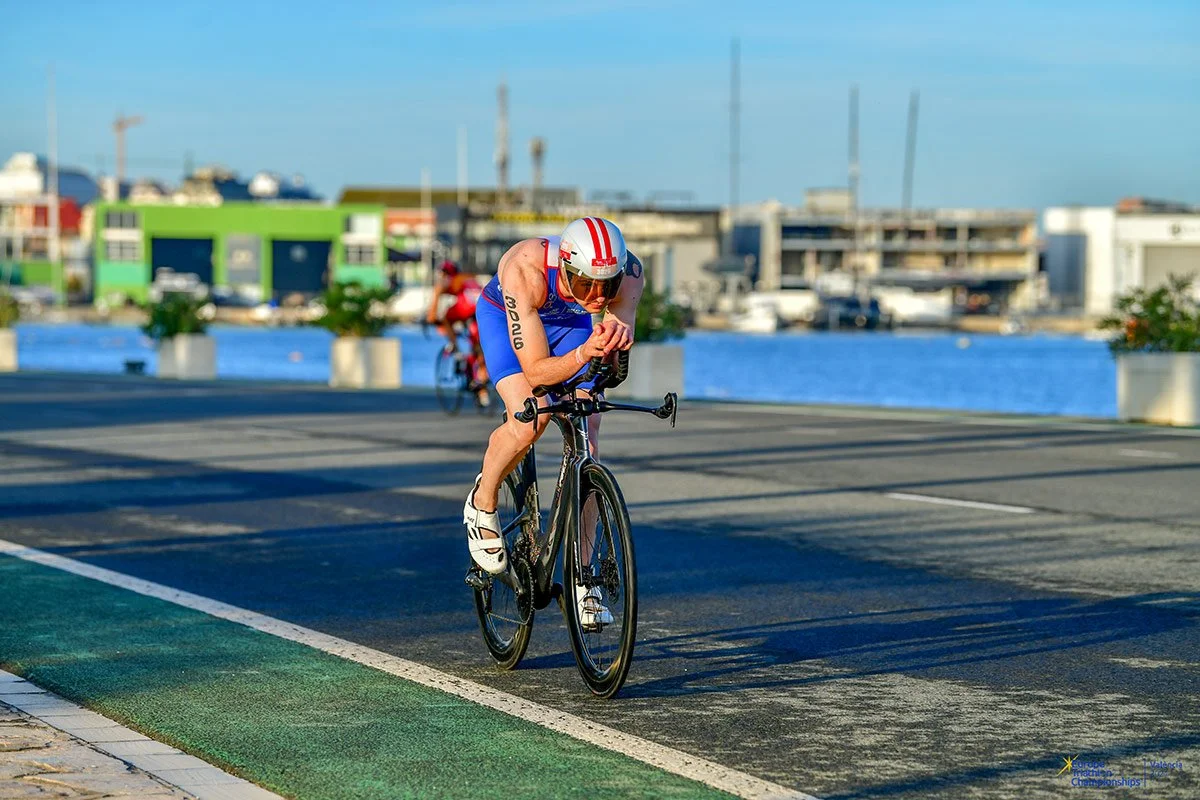
If you've got an Ironman 70.3 coming up and you're starting to think seriously about your nutrition, you're in a good place.
The goal is to make sure your fuelling lets all of your hard training show up on race day, rather than everything going wrong halfway through the run.
Having worked as a Registered Sports Nutritionist specialising in 70.3 and Ironman triathlon, there’s an interesting thing I’ve noticed about the 70.3 distance. It's long enough that what you eat and drink decides how your race goes, but it's short enough that plenty of people convince themselves they can wing it.
But most age group triathletes complete it somewhere between four and a half to seven hours, and that’s long enough for nutrition to make or break your big day.
In this post, I’ll walk you through the same system I use with the triathletes I work with, and I'll take you through a 70.3 nutrition plan in the order it actually happens: the days before, race morning, the bike, and the run. Then I'll show you a sample plan you can adapt, and how to personalise the numbers to you and your race.
Let's start where most triathletes don't — a few days out.
What to eat in the days before a 70.3 triathlon
If you're like a lot of the triathletes I speak to, you've already put thought into which gels to use and how to carry them. And that’s great, because it is important.
But what you eat in the two to three days before the race can have just as big an impact on your 70.3, and sometimes bigger.
There are two things to get right in this window.
Step 1: Bring your fibre down
GI problems like stomach cramps, nausea or needing to stop are one of the most common reasons people have a rough race. Picture being well into the bike managing a stomach that feels dodgy, knowing you've still got a half marathon to run. For many people, it's entirely preventable.
Most triathletes eat a good amount of fibre day to day. In normal life, that's a good thing. But when you're about to swim, bike and run for hours, fibre sitting in your gut is the last thing you want — it slows digestion, creates gas, and combined with the physical stress of racing, it can cause real problems.
Starting about three days out, make three targeted swaps:
Wholegrain bread, brown rice and wholewheat pasta become the white versions.
Cut out most of the vegetables you'd normally eat. I know this feels weird, and I always flag it when I send pre-race plans to clients because they look almost devoid of veg, but it's the right move here.
Swap high-fibre, skin-on fruit like apples and pears for lower-fibre options like ripe bananas, melon or tinned peeled fruit.
From experience, it can feel strange to spend months eating well and then move to white bread and skip the veg.
This isn't "healthy eating" in the usual sense but it’s crucial because it’s setting you up for a strong race.
Step 2: Carb loading for an Ironman 70.3
Carb loading is one of the most misunderstood parts of endurance nutrition.
Done right, the research points to a performance improvement of around 2–3%, which over a 70.3 is a meaningful chunk of time.
Done wrong, it leaves you heavy, bloated and flat before you've even started.
I once worked with an athlete who'd raced at the Ironman World Championships and felt awful every single time they carb loaded — bloated, sluggish, and increasingly anxious about it on the start line.
When I looked at what they were actually eating, it was mostly pizza and pasta bakes.
Sounds reasonable on paper, but loaded with cheese and veg they were high in fat and fibre, both of which slow things down and compete with carbohydrate absorption.
We changed the foods, and they went into the next race feeling light and ready for the first time in years.
If you get the principle of carbohydrate loading right, you’ll feel full of energy at the start line.
But to do it properly, you need to eat a lot. Here are the numbers I recommend:
Two days before the race: aim for 6–8g of carbohydrate per kilogram of body weight for the day.
The day before: increase to 8–12g per kilogram for the day.
If you've never been specific about this, you'll be surprised how much food that is — which is exactly why food choice matters.
Good options are white rice, pasta, bread, pancakes, low-fibre cereals and rice cakes. Liquid carbohydrate (a carb drink) is one of the most useful tools here, because it helps you hit the target without feeling completely stuffed. Other great options include confectionery like fruit gums.
The most common mistake I see with carb loading is planning.
Frequently, triathletes don’t completely map out their carb loading days and then find themselves at 9pm the night before trying to force down more pasta, feeling sick, and sleeping badly. I walk you through this day by day with my free carb loading plan, so you know you're hitting the right numbers with the right food.
If you want a deeper run through of carb loading, check out the video below. If you’re ready to move on, keep reading!
Race-morning nutrition for a 70.3
A lot of triathletes treat breakfast on the morning of a 70.3 like the most important meal of the last 48 hours, as if they need to cram in everything they're about to burn. That belief is understandable but wrong — your carb load has already done the heavy lifting.
Breakfast has three jobs: top up the carbohydrates your body used overnight, settle your stomach so you're not starving, and, crucially, avoid any GI trouble once you're racing.
There's no single correct 70.3 breakfast. What matters is that yours is high in carbohydrate, low in fibre and fat, moderate-to-low in protein, and something you've practised.
Make sure you practice your intended race breakfasts before your big day. When I support triathletes inside The Hub, my nutrition program for 70.3 and Ironman triathletes, I get them to test it before big training days like long bikes with a run.
Breakfasts I often use in race plans: white toast or a bagel with jam, low-fat rice pudding with a banana, or white rice with a little maple syrup. Aim to finish eating at least two hours before the start, ideally three to four, so you've digested it before you're in the water.
The final top-up
Around 20 minutes before the start, take on one more hit of carbohydrate — somewhere between 30 and 60g. A gel or a small sports drink is perfect. It tops you up and means you've got fuel available the moment the gun goes.
Now we get to the part that makes or breaks most 70.3s.
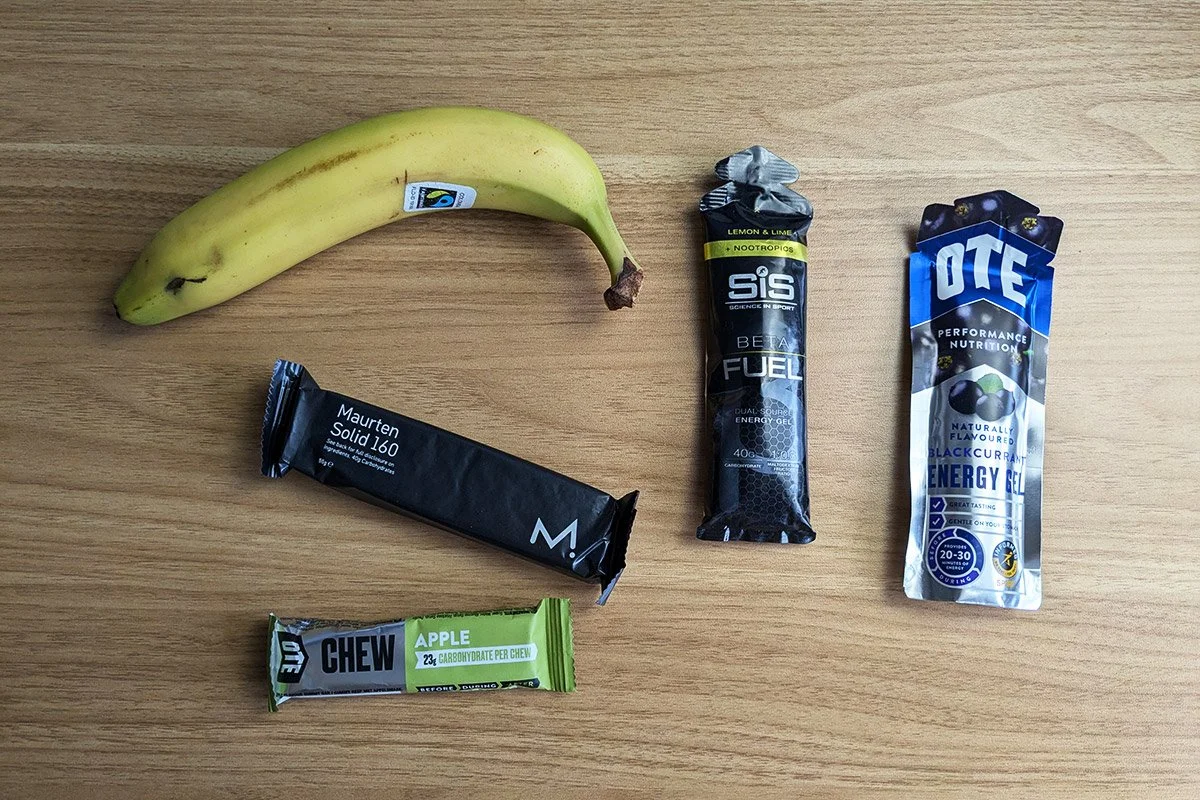
Fuelling the 70.3 bike leg: the golden trio
The 70.3 bike leg is where your fuelling either sets up a strong run or greatly increases the chances of you walking the half marathon.
Three things decide how it goes, and you have to think of them as one system rather than three separate boxes to tick.
I call them the golden trio: carbohydrate, fluid and sodium.
Carbohydrate
Go looking for advice on this and you'll find everything from "keep it minimal" to "push over 100g an hour." It's a confusing mess, and I've had athletes come to me following plans at both extremes.
So I strip it back: I want everyone hitting at least 60g of carbohydrate per hour on the bike.
That's a floor, not a ceiling: the minimum, and for most people it's very achievable.
One thing to get right: use dual-source carbohydrate, meaning a mix of glucose and fructose. They're absorbed through different pathways in the gut, so using both lets you take on more total carbohydrate per hour Over a 70.3 bike leg, that extra capacity adds up.
Plenty of athletes can comfortably handle more than 60g. If you've practised and you know you can tolerate it, work upwards. One of the members inside The Hub increased their intake from 60 to 85g per hour over a couple of months, and it was a big part of why they stayed strong deep into the run.
Fluid
Hydration sounds simple: keep drinking. But it’s more complex than that, because your hydration for a 70.3 triathlon directly impacts your performance.
Dehydration in itself can slow you down, but it also reduces your ability to absorb carbohydrate. So once you're behind on fluid, it doesn't matter how many gels you force in; you won't absorb them properly.
A reliable starting point for most people in most conditions is around 500ml per hour on the bike. That's not fixed — hot day or heavy sweater, you'll need more. You personalise it by testing in training under race-like conditions and paying attention to how you feel, and then adjusting as required.
Sodium
Sodium is the one people most often underestimate or get confused about. It keeps your fluid balance in check, and it matters a lot over a long race.
My starting recommendation: for every 500ml of fluid, aim for around 500mg of sodium — think of it as a 1:1 ratio.
A warning from experience: I once worked with a pro triathlete whose hydration plan looked great on paper, but they were taking on far less sodium than they thought, because they'd confused sodium with salt.
Salt is sodium chloride, and sodium is only about 40% of salt by weight. So a product listing 1g of salt actually gives you roughly 400mg of sodium.
Check your labels!
Fuelling the 70.3 run
You might think the nutrition decisions are behind you once you're off the bike and onto the run.
And while the biggest fuelling section is behind you, the run is where it all either pays off or falls apart, and every decision you made on the bike is about to be tested.
The same golden trio applies, but the numbers shift down because running is harder on the gut. The impact, the higher relative effort, and the fact that you're probably already a little dehydrated all make digestion less efficient.
This is why I tell people to fuel a touch more aggressively on the bike and then consciously drop it down for the run.
Carbohydrate: aim for at least 50g per hour. Gels, chews and sports drinks tend to be the most practical. I usually recommend avoiding solid foods during a 70.3 run.
Fluid: at least 300ml per hour, lower than the bike for the same reasons.
Sodium: hold that 1:1 ratio where you can, so roughly 300mg per 300ml.
One thing that makes the run easier: most Ironman events use Precision Fuel & Hydration's PH1000 on course as the hydration option, which contains 1,000mg of sodium per litre. At 300ml that's about 300mg of sodium, which lines up neatly with the target.
A sample 70.3 race-day nutrition plan
Here's how it looks pulled together for a roughly five-and-a-half-hour race — about a three-hour bike and a two-hour run.
Treat it as a worked example and scale it to your own predicted splits, not as a prescription.
| Stage | Carbohydrate | Fluid | Sodium | Practical example |
|---|---|---|---|---|
| ~20 min before swim | 30g | small sip | — | 1 gel or a few mouthfuls of sports drink |
| Swim (~35 min) | none | none | none | Just swim! |
| Bike (~3 hrs) | 60–80g/hr (~180–240g total) | ~500ml/hr (~1.5L) | ~1000mg/litre | Carb + electrolyte drink in your bottles, topped up with gels or chews to reach your hourly carb target |
| Run (~2 hrs) | ≥50g/hr (~100g total) | ≥300ml/hr (~600ml) | ~1000mg/litre | Gels or chews plus on-course PH1000 |
A faster athlete on a shorter race will compress these totals; someone out there for closer to seven hours will need more total nutrition across the day.
Next, I’ll run you through the three things that affect how much carbohydrate, sodium and fluid you should consume during your race.
But as a heads up, if you need help with your fuelling and would like a personalised plan created by me, check out The Hub. I support triathletes for 70.3 and Ironman distances, and create bespoke race nutrition plans, including carbohydrate loading guides, in-race fuelling plans and advice to recover faster.
How to personalise your 70.3 nutrition plan: the three variables
The plan above is a framework to start from. Two athletes can both be racing a 70.3 and end up with very different plans, and that comes down to three variables I always look at.
1. Conditions and sweat rate
Racing in heat is not the same as racing in the cool. The environment changes how much fluid and sodium you lose, and how well you absorb carbohydrate.
Sweat rates can vary enormously. I've seen one athlete lose half a litre an hour and another lose more than two litres in the same conditions, so the same hydration plan can't possibly suit both. A simple rule: if your race is likely to be hotter than you trained in, assume you'll need more fluid and sodium, and test that before race day. In hot races, hydration can become the priority over carbohydrate.
2. Gut tolerance and experience
The headline carb numbers you see online (a pro reportedly taking 180g an hour, age groupers pushing 120g) aren't right for everyone, and chasing them causes the exact symptoms people are trying to avoid.
Your race intake should be based on what you've proven you can tolerate in training at race-pace efforts. The good news is that tolerance is trainable; the athlete I mentioned earlier was able to move their intake comfortable from 60g to 85g of carbs per hour,
3. Pacing and intensity
The harder you race, the more carbohydrate you burn, the more stress your gut is under, and the less room you have for error. This means ensuring the pace you’re racing at matches your training pace, because if you go too hard you’re likely to struggle with stomach upset.
The course profile matters too. Races with lots of climbing and descending can call for a different nutrition strategy. I once had a first-timer set on fuelling with gels and bars on the bike, but when he practised on a route like his race, the descending meant he kept missing his fuelling windows, which ultimately meant he ended up using liquid carbs instead.
We’ll cover what products to cover next, but if you want a more in-depth exploration of how I tailor nutrition plans for athletes, check out the video below.
What products to use for a 70.3
After working with hundreds of triathletes using just about every brand going, the thing that decides success isn't the brand; it's whether the basics are right. So here's the order of priority I'd actually use, because most people get it backwards.
1. Get into the right carb range first
Underfuelling is still the most common problem I see. The fanciest formula in the world won't carry you to the line if you're only taking on 40g an hour when you need 70. Hit your numbers before you worry about anything else.
2. Use dual-source carbohydrate above 60g/hr
Your glucose transporters max out at roughly 60g an hour, so once you go beyond that you need fructose in the mix too. Don't overthink the exact ratio at this stage — just make sure you've got some of both.
3. Then, and only then, think about the ratio
You'll see a lot of marketing about glucose-to-fructose blends — 2:1 versus 1:0.8. There's research suggesting 1:0.8 lets you absorb and utilise a little more carbohydrate, and this could make a difference over a 70.3 race. But in reality, the likely benefit is small.
I've worked with triathletes who've won races and age groups on both formulas, and it's meaningless if you're underfuelling or you hate the taste or texture of your chosen product.
That last point is the trap I see most often: chasing the perfect product.
One triathlete I worked with was set on using the exact gels and drink mix as a top pro, bought a boatload of it, and simply couldn't get on with the taste — which meant they struggled to hit their carb numbers at all.
The best product is almost always the one you've tested, your gut tolerates, and you'll actually take on race day.
For my honest take on some of the most popular 70.3 triathlon brands, read my Maurten review, Science in Sport Beta Fuel Range, as well as alternative options to gels.
Frequently asked questions
How many carbs per hour do you need for a 70.3?
At least 60g per hour on the bike and at least 50g per hour on the run, as a floor. Many triathletes can tolerate more on the bike — beyond 80g per hour — but this is usually through an extended period of practising with higher intake rates.
How many gels do you need for a 70.3?
It depends on how much of your carbohydrate comes from drink mix versus gels, but as a rough guide, if a gel provides around 25–30g of carbohydrate and you're aiming for 60–80g an hour across a five-to-six-hour race, you're looking at somewhere in the region of eight to twelve gels. You don’t have to just use gels though — you can get carbohydrates from drink mixes and other alternatives like chew blocks.
Should you carb load for a 70.3?
Yes. The 70.3 distance is long enough to benefit from a proper carb load. Aim for 6–8g of carbohydrate per kilogram of body weight two days out, rising to 8–12g per kilogram the day before, using low-fibre, lower-fat carbohydrate sources. For more information and a free carb loading plan, read this article on carb loading for a 70.3 triathlon.
What should you eat the morning of a 70.3?
Something high in carbohydrate, low in fibre and fat, moderate-to-low in protein, and practised in training. White toast with jam, low-fat rice pudding with banana, or white rice with maple syrup all work well. Finish eating at least two hours before the start, ideally three to four.
How do you avoid stomach problems in a 70.3?
Reduce your fibre in the three days before the race, practise your race-day fuelling and breakfast in training so nothing is new on the day, and don't take on more carbohydrate per hour than you've proven you can handle. Staying on top of fluid also protects carbohydrate absorption, which indirectly protects your gut.
Can you do a 70.3 without gels?
Yes — gels are just one way to deliver carbohydrate. Drink mix, chews and some real food can cover your targets, although I typically advise sticking to sport-specific nutrition products during an Ironman 70.3.
Get your 70.3 nutrition planned properly
This guide gives you the framework I use with every triathlete.
Putting it together for your race — your preferences, sweat rate, course profile and expected race duration — is where it really comes alive.
If you need help creating a plan, consider joining The Hub, my nutrition membership for 70.3 and Ironman triathletes. You get a personalised carb loading plan, a race-day plan built around your splits, and help practising and refining it in the weeks before you race, so you turn up confident your nutrition is sorted and free to focus on the race itself.

James is a UK-based sports nutritionist specialising in triathlon and endurance performance. He holds a Master’s degree in Sport and Exercise Nutrition and is registered under the Sport and Exercise Nutrition Register (SENr), part of the British Dietetic Association (BDA).
A competitive triathlete himself, James has represented Great Britain at Age-Group level and brings firsthand experience of the challenges endurance athletes face.
Outside of Nutrition Triathlon, James works in the NHS as an Advanced Clinical Practitioner in General Practice.