Making It to the Finish Line: Fixing 70.3 Run Fuelling Mistakes
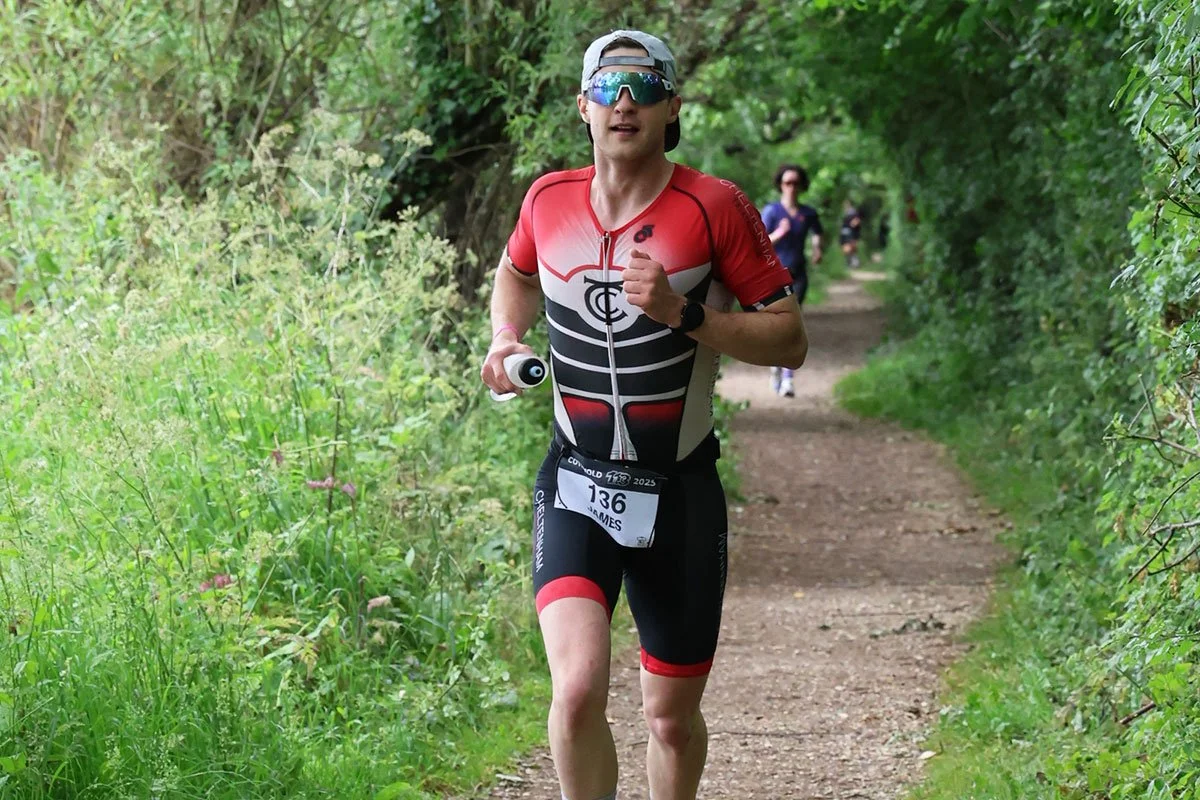
In 70.3 races, it’s common to see athletes start the half marathon well and then steadily unravel.
Pace drops, form deteriorates, and what should be a controlled effort turns into a survival exercise.
This isn’t always a fitness issue.
Many triathletes arrive at the run with adequate endurance and appropriate pacing intentions, yet still struggle to hold performance.
More often than not, the underlying problem is fuelling — either what was consumed on the bike, what’s taken on the run, or how well the entire plan has been practiced.
The run makes or breaks the race, your body is nearing full capacity, small nutritional errors will be amplified and so planning is essential.
The goal of this article is to outline sensible, practical approaches to fuelling the 70.3 run, and to help you choose a strategy that fits your physiology, preferences, and race conditions.
Why run fuelling matters more than you think
Most triathletes recognise the importance of bike nutrition, but underestimate how much the run still depends on carbohydrate, fluid, and sodium intake.
Even though the run is shorter than the bike leg, it’s where fatigue is most obvious. Glycogen availability is lower, impact forces are higher, and gastrointestinal tolerance is often reduced.
This combination makes fuelling feel harder — but also makes it more important.
Common assumptions such as “I’ll just grab something if I need it” or “I’ll push through” rarely work well in a half Ironman.
By the time hunger, thirst, or dizziness appear, it's too late and your performance is already compromised.
A run fuelling plan doesn’t need to be complex, but it does need to be intentional.
What we’re discussing below assumes you've carb loaded properly to begin with. If you're not sure how to, I have created this in depth Carb Loading Guide, explaining how to carb load the right way to finish your race strong.
3 viable approaches to fuelling the 70.3 run
There is no single correct strategy for fuelling the run. Different athletes succeed with different approaches, provided they are well rehearsed.
Broadly speaking, most plans fall into one of three categories.
1. Relying entirely on on-course nutrition
This is the simplest approach logistically. You use what’s provided at aid stations for both carbohydrate and fluid intake.
Why this can work
No need to carry extra weight
Fewer decisions during the race
Easy transitions and minimal equipment
Potential drawbacks
You’re limited to whatever products are available
Aid stations may not always have what you expect
Tolerance is highly individual — what works for one athlete may not work for you
If you choose this approach, it requires preparation.
You need to know exactly what products will be on course, how much carbohydrate and sodium they provide, and how frequently you’ll access them.
Crucially, you need to practice using those products in training, under fatigue.
This approach can work very well, but only when planned properly.
2. A hybrid strategy: part on-course fuel, part personal fuel
This is the most common approach among age-group triathletes.
You might carry your own gels but rely on aid stations for water, or carry a carbohydrate drink and use on-course water to supplement hydration or cooling.
Why this can work
Greater control over key nutrition (usually carbohydrates)
Less to carry compared to a full self-supported approach
Flexibility to adapt to conditions on the day
Potential drawbacks
Still some reliance on on-course availability
Requires coordination between what you carry and what you collect
Needs rehearsal to avoid over- or under-consumption
For many athletes, this offers the best balance between reliability and simplicity, provided the plan is clearly defined and practised.
3. Carrying all of your own nutrition
This approach prioritises control and predictability. All fluids, carbohydrates, and electrolytes are carried from the start of the run.
Why this can work
Complete consistency with products you tolerate well
No dependency on aid stations
Precise control over intake timing and quantity
Potential drawbacks
Extra weight, which can be noticeable late in the run
Increased thermal load in hot conditions
Requires a very clear and realistic intake plan
This approach suits triathletes who prefer certainty and who have practised carrying nutrition extensively.
It can be particularly effective if you struggle with on-course products or want to minimise decision-making during the race.
The principle that matters more than the strategy
Whichever approach you choose, one rule matters more than all others:
It must be practised.
A fuelling plan that looks sensible on paper often fails when tested under race-specific conditions.
Common issues include:
Difficulty tolerating intake at race pace
Underestimating fluid volume needs
Gastrointestinal discomfort from timing or concentration errors
Race day should never be the first time you fully execute your run fuelling plan.
Instead, use selected long runs or brick sessions to rehearse.
Wear your race kit, run at intended race intensity, and follow your nutrition plan exactly.
These sessions provide invaluable feedback and allow you to make adjustments while it still matters.
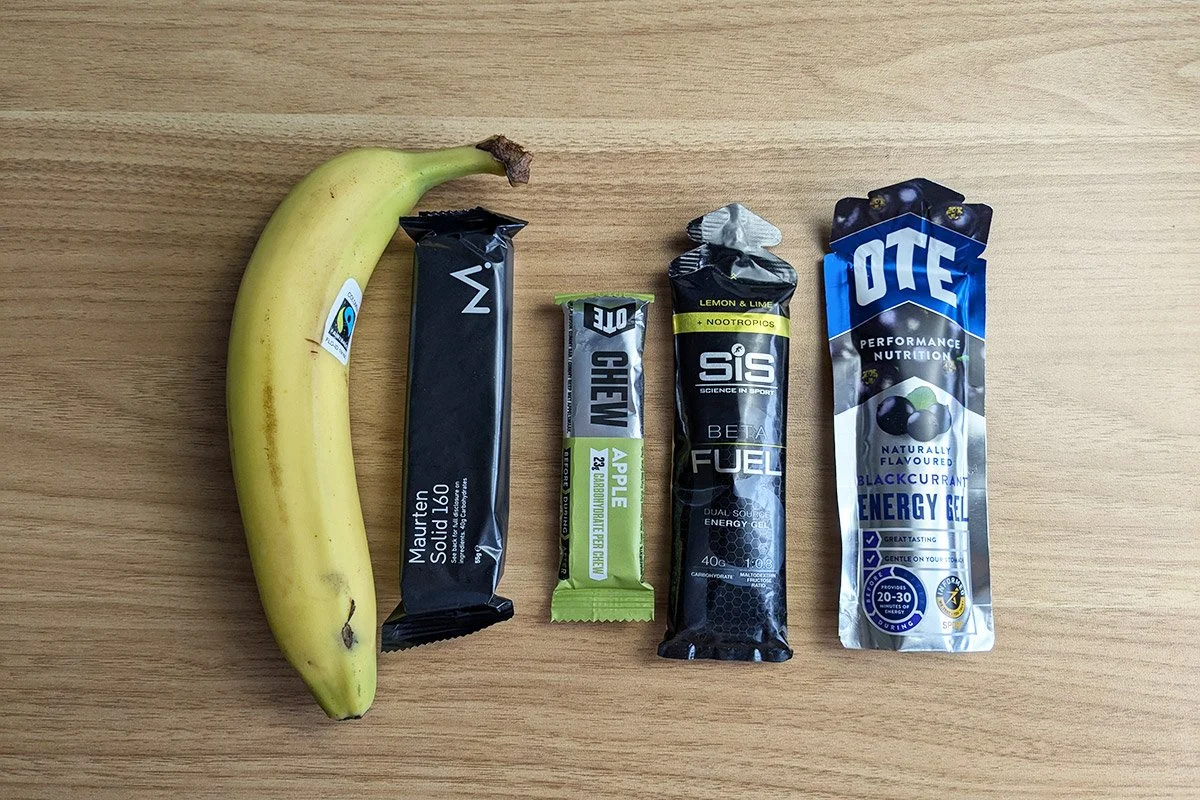
Practical reminders for race day
A few simple principles help prevent common mistakes:
Start fuelling early rather than waiting for hunger
Drink proactively, not reactively
Keep intake simple and realistic at race pace
Consider how easy products are to open and consume while running
The goal is not perfection, but consistency.
A plan you can execute calmly under fatigue will outperform an ambitious plan that’s difficult to follow.
A stronger finish is rarely about “toughness”
When triathletes struggle on the 70.3 run, it’s easy to assume they lack fitness or resilience.
In reality, many are simply under-fuelled or have not planned their nutrition effectively.
Fuelling the run well won’t make the race easy, but it will make your effort feel controlled rather than chaotic. It allows your fitness to show itself, instead of being masked by avoidable fatigue.
You’ve already invested months of training into preparing for race day. A clear, practiced run fuelling strategy helps ensure that effort translates into the result you’re capable of delivering.
For a practical overview of how to structure fuelling across the whole 70.3 race, this video on The Best 70.3 Triathlon Nutrition Plan for Race Day Fueling provides a simple, start - to - finish framework.